What insulating base should I use on laminate flooring for greater durability?
Whether you've just purchased a new floor or are replacing an existing one, choosing the right underlay for your laminate flooring is important. An effective underlay will provide thermal insulation, increase floor comfort, and reduce footfall noise. Find out which underlay is best here.
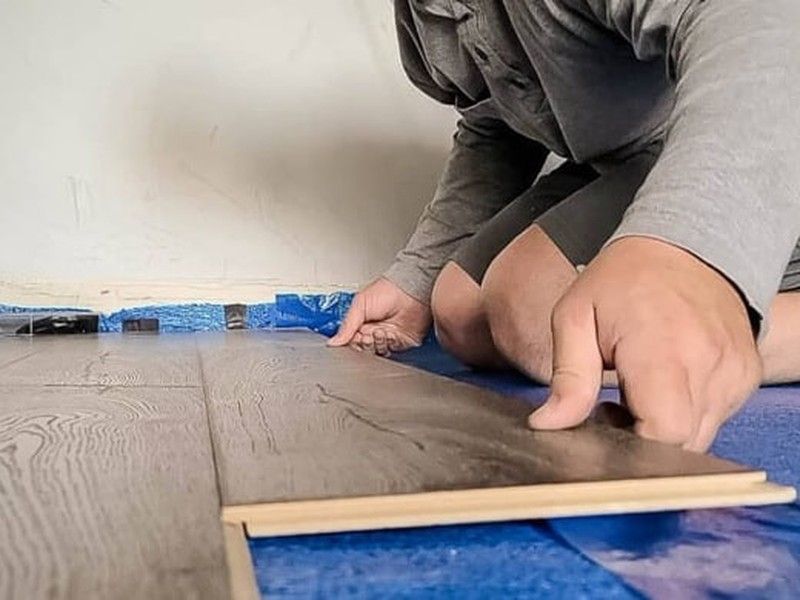
The term underlayment refers to a material that is installed over the subfloor and beneath the exposed floor covering. You'll want to choose an underlayment type that works well with your flooring and provides the performance characteristics you need. Certain underlayment materials are better suited for applications involving laminate flooring, including:
Reticulated closed-cell polypropylene foam (XLPP foam)
XLPP foam is the ideal choice for laminate flooring for many reasons. The material offers impressive compression characteristics, is resistant to mold and mildew, and offers superior acoustic performance.
The cross-linking of the molecules makes it more dimensionally stable, and the closed-cell construction provides a powerful moisture barrier.
Polyethylene Foam
Polyethylene (PE) foam is one of the most common underlayment materials for laminate flooring. PE foam underlays typically don't provide the top-notch acoustic performance or moisture protection that XLPP foam underlays do, but PE foam is often a more affordable alternative.
XPS Foam
XPS foam is a good choice for laminate flooring. Its extruded polystyrene (XPS) boards compress when walked on, reducing impact and providing a cushioned feel.
XPS foam underlays are usually sold as foldable products, meaning they can be easily unfolded and installed.
Recycled Rubber
Most recycled rubber underlays offer good acoustic ratings and are resistant to mold and mildew.
You may need to install an additional film to protect the floor from moisture, as many recycled rubber underlays are not moisture barriers. Rubber is also one of the most eco-friendly materials in laminate flooring underlayments.
Recycled Fibers
Compressed recycled fibers can also work well under laminate flooring. The material effectively mitigates sound, and its R-values prevent floors from getting too cold.
Asphalt and Kraft Paper Composite
This material is a moisture retardant, making it ideal for applications where moisture protection is important. Kraft paper is a favorite among installers because it makes it easy to slide laminate flooring planks into place.
Discover our XLPP foam insulation underlayments: They provide excellent thermal and acoustic insulation, while also being resistant to mold and moisture. Ideal for extending the life of your laminate flooring.
Check out some of our Quick Step cleaning products for your laminate flooring:
- QSSPRAYKIT cleaning kit
- QSUDLUN15 Uniclic floating base, 15m2 roll. Quick step
- QSUDLBP15 basic plus floating base, 15m2 roll. Quick step.
- QSREPAIR repair kit
The quality of the underlay can be measured by the TOG rating, which is used to monitor thermal insulation and its effectiveness. The higher the TOG rating, the better the level of insulation.
If you have a concrete subfloor, you will definitely need a waterproof membrane. Generally, a waterproof membrane is placed under the concrete subfloor to prevent moisture from spreading through the floor.
New builds and homes built after the 1970s should have a waterproof membrane already installed under the concrete.
The thickness of the underlay can also affect the floor's bonding mechanism. For example, when choosing which type of underlay to use for laminate flooring, a foam underlay thicker than 5 mm will not be ideal, as it can cause the snap-fit system to disengage.
Check out some of our laminate floors:
- Eligna Quick Step Laminate Flooring
- Quick Step Laminate Flooring, Impressive Patterns
- Classic Quick Step Laminate Flooring
If you're installing the floor over concrete, you must have an underlayment that includes a moisture-proof membrane (DPM). This blocks moisture that can damage the flooring.
- For the best installation, make sure the subfloor is completely level.
- You don't need to purchase additional underlayment for luxury vinyl tiles, as most come with a pre-installed underlayment, often made of cork or foam.
- If you're nailing the flooring, you can do so through the underlying layer.
- Like flooring, you should install the underlayment the length of the room.
With some helpful tips and guidance, you can enjoy an easier installation and a great-looking floor when you select the right underlayment. Working with laminates requires special attention to achieve the best possible results.
At Azulejos Solá, we have the best laminate floors on the market:
- Majestic Quick Step Laminate Flooring
- Longo Quick Step Laminate Flooring
- Signature Quick Step Laminate Flooring
Other related articles
 June 18, 2026
Natural mosaic mesh for decorating textured walls
Buy natural mosaic mesh tiles at Azulejos Solá and transform bathroom, kitchen, … June 15, 2026
Andalusian wall tiles: tips for choosing them according to the space
Buy Andalusian wall tiles at Azulejos Solá and create colorful, traditional, and … June 1, 2026
12 Types of Baseboards for Exterior Walls: Authentic Andalusian Style
Buy Andalusian tiles for baseboards at Azulejos Solá and add character to … May 7, 2026
8 types and finishes of ceramic roof tiles to choose the best roofing material
Buy ceramic roof tiles at Azulejos Solá and complete your roof with … April 16, 2026
Our customers trust us
Opinions of our clients
Receive our news